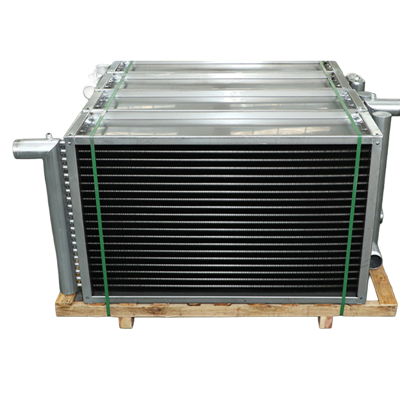
As a supplier of finned tube evaporators, I’ve witnessed firsthand the critical role these devices play in a wide range of industries, from refrigeration and air conditioning to chemical processing and power generation. The evaporation process is at the heart of these applications, and understanding how finned tube evaporators control it is essential for achieving optimal performance and efficiency. In this blog post, I’ll share my insights on the key aspects of evaporation process control in finned tube evaporators. Finned Tube Evaporators
Understanding the Evaporation Process in Finned Tube Evaporators
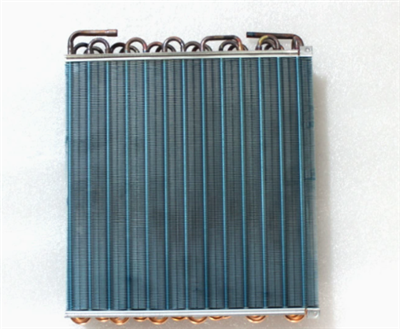
Before delving into the control mechanisms, it’s important to understand the basic principles of evaporation in finned tube evaporators. An evaporator is a heat exchanger that transfers heat from a warm fluid (such as air or a refrigerant) to a cold fluid (usually a refrigerant), causing the cold fluid to evaporate. Finned tubes are used to increase the surface area available for heat transfer, which enhances the efficiency of the evaporation process.
The evaporation process typically involves the following steps:
- Liquid refrigerant enters the evaporator: The refrigerant, usually in a liquid state, enters the evaporator tubes at a specific pressure and temperature.
- Heat transfer occurs: As the warm fluid (e.g., air) flows over the finned tubes, heat is transferred from the warm fluid to the refrigerant inside the tubes. This causes the refrigerant to absorb heat and start to evaporate.
- Vaporization of the refrigerant: The absorbed heat energy causes the liquid refrigerant to change phase from a liquid to a vapor. The vaporized refrigerant then exits the evaporator and is typically compressed and condensed in a refrigeration cycle.
Key Factors Affecting the Evaporation Process
Several factors can influence the evaporation process in finned tube evaporators, including:
- Temperature difference: The greater the temperature difference between the warm fluid and the refrigerant, the higher the rate of heat transfer and evaporation.
- Flow rate: The flow rate of the warm fluid and the refrigerant affects the heat transfer coefficient and the residence time of the fluids in the evaporator, which in turn impacts the evaporation process.
- Surface area: The increased surface area provided by the fins allows for more efficient heat transfer, leading to improved evaporation performance.
- Refrigerant properties: The physical properties of the refrigerant, such as its boiling point, latent heat of vaporization, and viscosity, can significantly affect the evaporation process.
Control Mechanisms for the Evaporation Process
To ensure optimal performance and efficiency, finned tube evaporators are equipped with various control mechanisms that regulate the key factors affecting the evaporation process. Here are some of the common control methods:
Temperature Control
Temperature control is crucial for maintaining the desired evaporation rate and preventing overheating or under – cooling. This can be achieved through the following means:
- Thermostatic expansion valves (TXV): TXVs are commonly used in refrigeration systems to control the flow of refrigerant into the evaporator based on the temperature of the refrigerant vapor leaving the evaporator. By adjusting the refrigerant flow, the TXV helps to maintain a constant superheat (the difference between the actual temperature of the refrigerant vapor and its saturation temperature at the given pressure), which ensures efficient evaporation.
- Electronic expansion valves (EEV): EEVs offer more precise control compared to TXVs. They use electronic sensors to monitor the temperature and pressure of the refrigerant and adjust the valve opening accordingly. EEVs can respond quickly to changes in operating conditions, allowing for better control of the evaporation process.
- Thermostats: Thermostats can be used to control the temperature of the warm fluid flowing over the finned tubes. For example, in an air – conditioning system, a thermostat can turn the fan on or off or adjust its speed to maintain a constant air temperature, which in turn affects the evaporation rate of the refrigerant.
Flow Rate Control
Controlling the flow rate of both the warm fluid and the refrigerant is essential for optimizing the evaporation process.
- Pump speed control: In systems where the warm fluid or the refrigerant is circulated by pumps, the pump speed can be adjusted to control the flow rate. Variable – speed pumps are often used to provide precise control, allowing the system to adapt to changing load conditions.
- Flow control valves: Flow control valves can be installed in the refrigerant or warm fluid lines to regulate the flow rate. These valves can be manually adjusted or automated using sensors and controllers to maintain the desired flow rate.
Pressure Control
Pressure control is closely related to temperature and flow rate control and is important for ensuring the safe and efficient operation of the finned tube evaporator.
- Pressure – regulating valves: Pressure – regulating valves are used to maintain a constant pressure in the refrigerant circuit. They can prevent over – pressurization, which could damage the evaporator or other components of the system, and ensure that the refrigerant is operating within the optimal pressure range for evaporation.
- Suction pressure control: In refrigeration systems, the suction pressure of the compressor is often controlled to regulate the evaporation process. By adjusting the compressor speed or the opening of the suction valve, the suction pressure can be maintained at a level that promotes efficient evaporation.
Advanced Control Strategies
In addition to the traditional control methods mentioned above, advanced control strategies are being increasingly used to enhance the performance of finned tube evaporators.
- Model – based control: Model – based control uses mathematical models of the evaporation process to predict the behavior of the system and optimize the control parameters. These models take into account factors such as heat transfer coefficients, fluid properties, and system dynamics, allowing for more accurate and efficient control.
- Adaptive control: Adaptive control systems can automatically adjust the control parameters based on changes in the operating conditions of the evaporator. For example, if the ambient temperature or the load on the system changes, the adaptive control system can modify the refrigerant flow rate or the fan speed to maintain optimal performance.
- Remote monitoring and control: With the development of Internet of Things (IoT) technology, remote monitoring and control of finned tube evaporators are becoming more common. This allows operators to monitor the performance of the evaporator in real – time, receive alerts in case of any malfunctions, and make adjustments to the control parameters from a remote location.
Benefits of Effective Evaporation Process Control
Effective control of the evaporation process in finned tube evaporators offers several benefits:
- Energy efficiency: By optimizing the heat transfer and evaporation process, the evaporator can operate more efficiently, reducing energy consumption and operating costs.
- Improved performance: Precise control of the evaporation process ensures that the evaporator can meet the required cooling or heating capacity, providing consistent and reliable performance.
- Extended equipment life: Proper control of temperature, pressure, and flow rate helps to prevent over – stressing of the evaporator components, reducing the risk of premature failure and extending the equipment life.
Conclusion
As a supplier of finned tube evaporators, I understand the importance of effective evaporation process control. By implementing the right control mechanisms and strategies, our customers can achieve optimal performance, energy efficiency, and reliability in their applications. Whether it’s through traditional temperature and flow rate control methods or advanced model – based and adaptive control systems, we are committed to providing our customers with the expertise and solutions they need to control the evaporation process effectively.
Finned Tube If you’re interested in learning more about our finned tube evaporators or have any questions about evaporation process control, I encourage you to reach out to us. We’re here to help you find the best solutions for your specific needs and ensure the success of your projects.
References
- Stoecker, W. F., & Jones, J. W. (1982). Refrigeration and Air Conditioning. McGraw – Hill.
- Incropera, F. P., & DeWitt, D. P. (2001). Fundamentals of Heat and Mass Transfer. John Wiley & Sons.
- ASHRAE Handbook. (2017). Refrigeration Volume. American Society of Heating, Refrigerating and Air – Conditioning Engineers.
Xiangshui Derkang Refrigeration Equipment Co., Ltd.
Address: No. 2, Xiaojian Town Entrepreneurship Park, Xiangshui County
E-mail: 505745223@qq.com
WebSite: https://www.xsderk.com/
