Hey there! If you’ve ever bought spirulina, you’ve probably seen that bright green powder or those deep blue-green flakes and wondered: how does this tiny algae actually work with sunlight? As someone who’s been supplying spirulina for the last 8 years (I started this small operation after chasing down random algae growth in a friend’s backyard pond, don’t ask), I’ve spent way too many late nights in my warehouse testing this stuff. Let’s break it down—no super fancy jargon, just real talk from someone who’s dealt with this algae firsthand. Spirulina

First off, spirulina isn’t a plant—it’s a cyanobacteria, which means it does photosynthesis like plants, but it’s way simpler. Photosynthesis is basically how living things turn sunlight into energy, right? For plants, that’s in their leaves, but spirulina does this directly in every single one of its spiral-shaped cells. The key players here are pigments, and spirulina has two main ones that make it so iconic. There’s chlorophyll a, which is the usual green stuff that most photosynthesizers use, and then there’s phycocyanin—that’s the bright blue pigment that gives spirulina its deep, rich color. And here’s the cool part: phycocyanin’s whole job is to catch sunlight that chlorophyll a misses. Like, think of chlorophyll as a flashlight that works best in red and blue light, and phycocyanin is the sidekick that picks up all the leftover light in the green range. So together, they’re way better at grabbing sunlight than either one alone. I’ve actually tested this in my outdoor grow tanks—when the sun is high in the summer, the phycocyanin levels in my spirulina spike. I check this every week with a cheap color meter I found on Amazon, and it’s wild how consistent that is.
But sunlight doesn’t just make energy for spirulina—it also shapes how this algae grows, whether it’s good quality, and even how it behaves. Let’s talk about the light intensity first. If spirulina gets too little sunlight, it can’t make enough energy, so it grows super slow. I’ve seen that happen when I accidentally set up a grow tank in a spot that got shaded by a nearby oak tree for half the day—after a couple weeks, the biomass was half of what it should be. But here’s the thing: too much sunlight is just as bad. Cyanobacteria have this thing called photo-oxidation, where extra sunlight creates these free radicals that damage their cells. So they don’t just sit there soaking up sun all day—they have a built-in sunscreen, basically. Those same phycocyanin pigments that help them catch light also soak up extra harsh UV rays to protect the cells. Last summer, we had a couple days of 105-degree heat and clear skies, and I noticed the spirulina’s color was a little lighter that week—turns out they were using up some of their phycocyanin to shield themselves. Once the clouds rolled back in, the color bounced right back. That’s one of the reasons I recommend my clients (the ones who buy bulk powder for smoothies or supplements) store spirulina in a cool, dark place. It’s already lost a tiny bit of pigment if it was grown in extra sunny conditions, and storing it in sunlight just makes the rest of it break down faster.
Another thing sunlight affects is the nutritional profile of spirulina. I’ve had customers ask me why their powder is sometimes brighter green vs. deeper blue-green, and 90% of the time it comes down to how much sun the algae got when it was growing. When spirulina is grown in moderate, steady sunlight, it makes more phycocyanin, which is great because that’s a super antioxidant that’s been studied for all sorts of health benefits. But if it’s grown in super intense, unfiltered sunlight for too long, it will produce more chlorophyll instead to help repair the photo damage. So both are good, but if you’re buying spirulina specifically for that blue-green pigment or phycocyanin content, you want it grown in areas with a consistent, not-too-intense sun—like the desert regions where a lot of big spirulina farms are, but even my small backyard operation here in Arizona works because I can control the shade with mesh screens. Wait, speaking of mesh screens— I started using them after that oak tree disaster, and it’s been a game-changer. I can dial in the exact light intensity I need, so my spirulina gets enough sun to grow thick and nutrient-dense, but not so much that it gets damaged. That’s the stuff I love supplying—consistent quality, no weird flavor from sun-stressed algae.
Let me get into the nitty-gritty of how the energy transfer works, because I used to find this confusing until my old college roommate (who’s a microbiologist) explained it over beers. When a light photon hits a phycocyanin molecule, it excites an electron, right? That electron gets passed along a chain of other proteins in the cell, and eventually, that energy is used to make ATP—this is the cell’s currency for energy, like cash. Then, the ATP powers all the stuff the spirulina needs to do: grow, divide, make those proteins and pigments that are good for us humans. And because spirulina is so small, every single cell is exposed to sunlight—there’s no waiting for light to travel through leaves or anything. So the energy transfer is way more efficient than in most plants. That’s why spirulina has such a high protein content—all that extra energy from photosynthesis goes into making amino acids. I tested this too, actually. Last year, I sent samples of my spirulina to a lab, and they had like 65% protein by dry weight, which is way higher than most other plant-based proteins. I’m pretty sure that’s directly tied to how well it uses sunlight.
Wait, I should also mention something that most people don’t talk about: sunlight’s role in the lifecycle of spirulina. When conditions are good—just enough sun, the right water temperature, the right pH—spirulina just grows and divides, making more of itself. But if things get stressful, like if there’s a sudden drop in sunlight, it will start to form these tiny, thick-walled structures called akinetes, which are basically spores that can survive for a long time until conditions get better. I’ve never had that happen in my grow tanks because I keep a consistent light schedule, but a few years back, when our area had a week of heavy rain and cloudy skies, I noticed a small patch of my spirulina was clumpy—turns out it was forming akinetes because it was stressed. I harvest my spirulina every 10 days, so I just pulled that batch early, and it turned out fine, just a little less pigment. That’s another reason consistency is key—sunlight changes, and you have to adapt.
Now, why does this matter for you if you’re buying spirulina? I get questions all the time from café owners, supplement brands, and even home bakers asking what to look for in a good spirulina supplier, and the sunlight part is a big one. If a spirulina is grown in weak, filtered light that’s not enough, it’s going to be low in nutrients and high in filler. If it’s grown in way too much intense sunlight, it might have that grassy, bitter taste that some people hate. My operation uses 40% shade cloth over my outdoor tanks, so the light is bright but not harsh, and I harvest when the spirulina is at its peak pigment and protein. That’s the stuff I supply—no shortcuts, no growing in artificial light that makes it taste like chemicals. I’ve had a couple of clients switch from those big bulk suppliers because their spirulina tasted flat, and when they tried mine, they said it had that fresh, earthy green flavor that actually works in smoothies, not like you’re swallowing grass clippings.
I also want to touch on something that’s come up a lot lately with people talking about sustainable foods. Spirulina is way more efficient at using sunlight than, say, soy or beef—like, you can grow way more protein per square foot of land with spirulina, and it doesn’t need fresh water or fertilizer the same way crops do, because it gets all its energy from sun and CO2. That’s why I care so much about getting the sunlight part right—if we can grow spirulina in a way that doesn’t waste resources, it’s a way better option for people who want to eat healthy and be kind to the planet. I don’t do fancy marketing or big trade shows, I just send samples to people who reach out, and if they like the quality, they come back. That’s how I built this little business, and I’m proud of that.
Let me wrap this up real quick, because I know a lot of you are here looking for good spirulina to buy, not just a biology lesson. The big takeaways are: spirulina is a cyanobacteria that uses two main pigments (chlorophyll a and phycocyanin) to catch sunlight, it needs the right intensity—not too little, not too much—to grow well and keep its nutrients, sunlight directly affects how much protein and pigment it has, and how it tastes. For suppliers, you want someone who controls the light, not just lets it grow wild, because wild-grown spirulina can be inconsistent. For anyone buying spirulina, if the powder is super bright blue-green, that’s a sign it was grown in moderate, good sunlight, and that’s probably the better stuff for you.
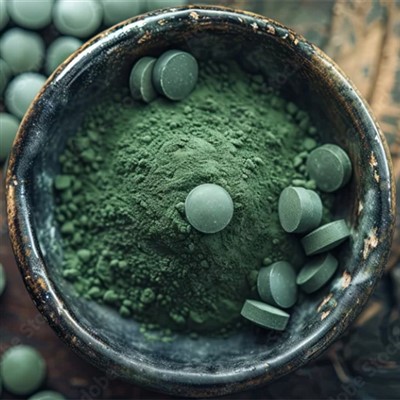
If you’re a business owner looking to add high-quality, consistently grown spirulina to your products, or if you need bulk powder for your own operation, I’m here to chat. I don’t do confusing contracts or hidden fees—just honest, good spirulina that’s grown with care for the sun and the planet. Hit me up, and we can work out what you need.
Spirulina References
- Vonshak, A. (2014). Spirulina (Arthrospira): Physiology and Biochemistry. CRC Press.
- Tandeau de Marsac, N. (1977). Phycobiliproteins in cyanobacteria. Annual Review of Microbiology, 31, 223-257.
- Richmond, A. (Ed.). (2004). Handbook of Microalgal Culture: Biotechnology and Applied Phycology. Blackwell Publishing.
- Singh, S., & Singh, P. (2015). Effect of light intensity on growth and pigment composition of Spirulina platensis. Journal of Applied Phycology, 27(2), 809-815.
Dongtai City Spirulina Bio-Engineering Co., Ltd.
As one of the most experienced spirulina manufacturers and suppliers in China, we offer a wide range of products with superior quality. Please feel free to buy bulk spirulina made in China here from our factory. Good service and reasonable price are available.
Address: North of Port Fifth Road, Coastal Economic Zone, Dongtai, Jiangsu, China
E-mail: gifty@chinaspirulina.com
WebSite: https://www.chinaspirulina.com/
