Hey there! I’m a supplier of welding robots, and I often get asked this question: "Can a welding robot be used for pipe welding?" Well, let’s dive right into it and find out. Welding Robot
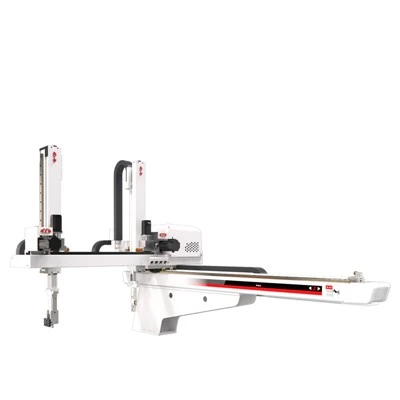
First off, let me tell you a bit about welding robots. These bad boys are like the superheroes of the welding world. They’re designed to do welding jobs with precision and consistency. They can work non – stop, unlike us humans who need breaks for coffee and snacks. And they don’t get tired or make mistakes due to fatigue.
When it comes to pipe welding, it’s a whole different ballgame. Pipe welding has its own set of challenges. Pipes come in all shapes and sizes, from small – diameter ones used in plumbing to large – diameter pipes for oil and gas pipelines. The joints in pipe welding can be tricky, too. You’ve got butt joints, fillet joints, and all kinds of angles to deal with.
But here’s the good news: welding robots are more than capable of handling pipe welding tasks. In fact, they’re a great fit for this job. Let’s look at some of the reasons why.
Precision and Consistency
One of the biggest advantages of using a welding robot for pipe welding is precision. Robots can be programmed to follow a specific path with extreme accuracy. When you’re welding pipes, especially in industries where the quality of the weld is crucial, like the oil and gas or aerospace industries, precision is key. A small error in the weld can lead to big problems down the line, like leaks or structural failures.
For example, in an oil pipeline, a faulty weld can cause oil to leak, which is not only a huge environmental hazard but also a financial disaster. A welding robot can ensure that each weld is exactly the same, with the right amount of penetration and bead width. This consistency is hard to achieve with manual welding, no matter how skilled the welder is.
Speed and Efficiency
Welding robots are fast. Really fast. They can complete a welding job in a fraction of the time it would take a human welder. In a pipe – welding project, time is money. The faster you can get the pipes welded and installed, the sooner the project can be completed and start generating revenue.
Let’s say you have a large – scale pipeline project. With a welding robot, you can set it up to work around the clock. It doesn’t need to take breaks, and it can maintain a consistent welding speed. This means you can get more pipes welded in a shorter period of time, which is a huge advantage for any project manager.
Safety
Pipe welding can be a dangerous job. Welders are exposed to high temperatures, harmful fumes, and the risk of electric shock. By using a welding robot, you can reduce the number of human welders in the dangerous work area. The robot can do the welding while the human operators can monitor the process from a safe distance.
This not only protects the workers from potential injuries but also reduces the risk of human error due to fatigue or distraction. In a high – risk environment like a pipe – welding site, safety should always be a top priority.
Adaptability
As I mentioned earlier, pipes come in all shapes and sizes. Welding robots are very adaptable. They can be programmed to weld different types of pipes, with different diameters and wall thicknesses. You can change the welding parameters, such as the welding speed, current, and voltage, depending on the specific requirements of the pipe.
For example, if you’re welding a thin – walled pipe, you’ll need a different set of welding parameters compared to a thick – walled pipe. A welding robot can easily adjust to these changes, ensuring that the weld quality is maintained.
Cost – Effectiveness
In the long run, using a welding robot for pipe welding can be cost – effective. While the initial investment in a welding robot may be high, the savings in labor costs, reduced rework, and increased productivity can quickly make up for it.
Let’s break it down. Labor costs are a major expense in any welding project. By using a robot, you can reduce the number of human welders needed. Also, since the robot produces high – quality welds with fewer errors, the amount of rework is significantly reduced. Rework not only costs time but also money in terms of additional labor and materials.
Limitations
Now, it’s not all sunshine and rainbows. Welding robots for pipe welding do have some limitations. One of the main challenges is the initial setup. Programming a welding robot to weld a specific type of pipe joint can be complex and time – consuming. You need to have a skilled programmer who understands both the welding process and robotics.
Another limitation is the need for a stable working environment. Robots are very sensitive to vibrations and movement. If the pipes are not properly fixed or if there is any external vibration, it can affect the quality of the weld.
Also, in some cases, manual welding may still be necessary. For example, in tight spaces or when dealing with complex pipe geometries, a human welder may be able to do a better job. But overall, these limitations can be managed with proper planning and setup.
Real – World Applications
Welding robots are already being used successfully in many pipe – welding applications. In the oil and gas industry, they’re used to weld pipelines that transport oil and gas over long distances. In the construction industry, they’re used to weld pipes for plumbing and HVAC systems.
In the automotive industry, welding robots are used to weld exhaust pipes. These pipes need to be welded with high precision to ensure proper functioning and compliance with emissions standards.
Conclusion
So, can a welding robot be used for pipe welding? Absolutely! They offer a whole bunch of benefits, including precision, speed, safety, adaptability, and cost – effectiveness. Sure, they have some limitations, but with the right setup and programming, these can be overcome.
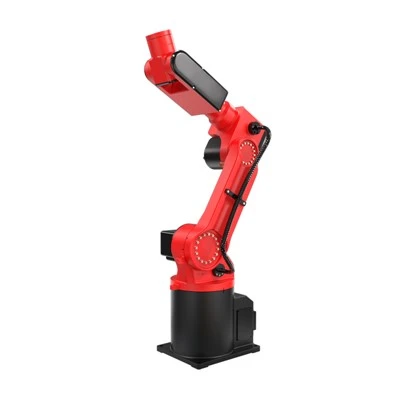
If you’re in the market for pipe – welding solutions, consider using a welding robot. It can take your pipe – welding projects to the next level. Whether you’re a small – scale contractor or a large – scale industrial company, a welding robot can be a valuable asset to your business.
Industrial Robot If you’re interested in learning more about our welding robots and how they can be used for your pipe – welding needs, feel free to get in touch. We’d love to have a chat with you and discuss how our products can fit into your projects. Don’t hesitate to reach out and start the conversation about enhancing your welding processes with our state – of – the – art robotic solutions.
References
- AWS Welding Handbook, Volume 1: Welding Science and Technology
- Robotics in Manufacturing Handbook, edited by Mykhaylo Y. Kosturu
Robotic Technology (GD) Co., Ltd.
Robotic Technology (GD) Co., Ltd. is one of the most experienced welding robot manufacturers and suppliers in China, also supports custom service and one year warranty. Please feel free to wholesale CE approved welding robot for sale here from our factory. Contact us for quotation.
Address: Room 102, No. 30,Hengfeng 2nd Road,Daguo, Changping Town, Dongguan City,Guangdong,China
E-mail: admin@iroboticplus.com
WebSite: https://www.rb-tic.com/
