Let’s cut to the chase: if you run a production line, a packaging facility, or a warehousing operation, your conveyor chain isn’t just a bunch of metal links hauling goods from Point A to Point B. It’s the unsung gatekeeper of your throughput—and more often than not, the variable that’s most misunderstood when it comes to moving more product, faster. Conveyor Chain

I’ve been in the conveyor chain supply game for 12 years now, and I’ve sat across from plant managers in everything from automotive assembly plants to food processing facilities who tell me, “We just cranked up the chain speed, and throughput went up. No brainer.” It sounds simple, right? If your chain moves 10 units an hour at 10 feet per minute (FPM), crank it to 20 FPM, and you’ll get 20 units an hour. But that’s rarely the whole story. If you speed the chain up, then realize half your packages are tipping over, or your chain is stretching so much it’s slipping off the sprocket, or your employees can’t keep up with loading/unloading fast enough, you’re not increasing throughput—you’re creating a bottleneck that costs you more in downtime than you save in volume.
Today, I want to break down the real, practical impact of chain speed on conveyor throughput, from the hard numbers to the hidden pitfalls, and what that means for you as a facility owner or operations lead.
First, let’s get one definition straight: throughput isn’t just how fast you move chain. It’s the number of usable, undamaged units that make it through your line in an hour, day, or shift. So speed is a factor, but only if it’s paired with consistency, reliability, and compatibility with every other part of your operation.
Let’s start with the math, because that’s where most people start—and stop. The basic throughput formula for most flat, straight conveyors is: Throughput (units per hour) = (Chain Speed (FPM) × 60 minutes) ÷ Unit Spacing (feet per unit). For example: if your unit spacing is 2 feet, at 10 FPM, that’s (10 × 60) ÷ 2 = 300 units per hour. Crank speed to 15 FPM, and that jumps to (15 × 60) ÷ 2 = 450 units per hour. That’s a 50% increase on paper. But here’s the catch: that formula only works if every other variable stays exactly the same. Change chain speed, and a dozen other variables shift with it. That’s where problems start.
Let’s talk about the first big catch: chain speed and the physical limits of your conveyor and chain. Every conveyor chain is rated for a maximum speed, and that rating isn’t arbitrary. It’s based on two main things: chain pitch (the distance between each link) and load capacity. If you have a chain rated for 100 FPM, running it at 150 FPM might sound like a quick throughput boost, but here’s what happens: the centrifugal force on each link spikes. When a link is moving fast, the weight of the chain pulling on the sprocket teeth creates stress that the chain wasn’t designed to handle. Over time, that stress leads to elongation—how much the chain stretches under load. For heavy-duty conveyor chains, even a 0.5% elongation is normal, but run that chain 50% over its rated speed, and you could see 2-3% elongation in months, not years. That elongation causes the chain to ride higher on the sprockets, skip teeth, or even jump off entirely. I had a customer in the automotive parts business two years ago who did exactly this: they sped up their assembly line conveyor chain to hit a temporary holiday demand spike, and by the end of the first week, they were replacing three chains a day, costing them $12,000 in downtime and parts. That “50% throughput boost” turned into a net loss because of unplanned downtime.
Then there’s the load factor. If your conveyor is carrying individual boxes, pallets, or parts, the weight of that load changes how speed impacts stability. For light loads, say small retail packages weighing under 10 pounds, speed might be less of a stability issue—until you hit a point where inertia kicks in. When a conveyor chain stops or slows down to merge with another line, a fast-moving light package will keep sliding forward, causing collisions and jams. For heavy loads, like engine blocks or industrial pallets, speed isn’t just about inertia—it’s about the chain’s ability to carry that weight at velocity. A 50-pound unit moving at 10 FPM is one thing; moving at 30 FPM, the dynamic load (the load multiplied by the speed factor) jumps to 150 pounds. If your chain was sized for a static load of 50 pounds, that dynamic load is way over its rating. I’ve had many food processing clients come to me with this exact problem: they speed up their product line to meet demand, only to have chain links break, spilling ingredients onto the floor, triggering OSHA violations, and shutting down operations for hours. That’s the hidden cost of ignoring dynamic load from increased chain speed.
Now, let’s move to a less talked-about impact: speed and upstream/downstream throughput alignment. Your conveyor chain is only as fast as the slowest part of your operation. If you’re loading 200 units an hour by hand, cranking your conveyor to 400 units an hour is useless. The conveyor will pile up with units that no one is there to unload, leading to jams, damage, and extra labor to clear the line. I worked with a distribution center last year that tried this: they upgraded their conveyor chain speed from 60 FPM to 100 FPM to handle Black Friday volume, but their order picking team was only able to process 250 orders per hour. The result? They had 3,000 orders backed up on their conveyor in one day, 200 units damaged from being stacked too high, and overtime costs that erased any gains from the faster line. The lesson here: increasing chain speed only improves overall throughput if every adjacent process—loading, unloading, sorting, packaging—can match that pace. If they can’t, you’re not increasing throughput, you’re creating a bottleneck.
There’s also the impact on product damage, which is a huge, often overlooked component of true throughput. Throughput isn’t just number of units moved—it’s number of units that arrive undamaged and sellable. At faster chain speeds, the force of the chain moving, stopping, or merging with other lines is higher. For fragile products like glass bottles, electronics, or fresh produce, even a small jolt from a fast-moving conveyor can cause cracks, dents, or spoiled goods. I had a beverage customer a few years back who tested increasing their line speed from 80 FPM to 110 FPM for their bottled water line. On paper, throughput jumped from 12,000 bottles per hour to 16,500. But by the end of the first day, they had a 12% damage rate—bottles with cracked caps or side seams that leaked, making them unsellable. By day two, that damage rate jumped to 18%, because the high speed was causing the chains to vibrate, which made the bottles rub against each other as they moved. They ended up rolling the speed back to 90 FPM, where their damage rate dropped to 2%, and throughput ended up being 14,850 bottles per hour—higher than they ever hit at 110 FPM, with zero damage-related losses. That’s the real story of chain speed and throughput: it’s not a linear relationship. There’s a sweet spot, and it’s rarely the fastest possible speed.
So what factors should you actually consider when adjusting chain speed to boost throughput? Let’s break this down into practical steps you can apply, not just theory.
First, start with your chain’s rated limits. Every conveyor chain has a manufacturer’s rating for maximum speed, dynamic load, and elongation. Don’t guess—look at the spec sheet. If you’re not sure, send a sample of your chain or a diagram of your conveyor to a supplier who specializes in conveyor chains (hint: that’s us, by the way) and have them run a load calculation. You might find that your existing chain is only rated for 100 FPM, but upgrading to a heavy-duty chain with higher tensile strength can let you run at 140 FPM without the risk of elongation or breakage. That’s a far better play than forcing a subpar chain to run faster and paying for downtime.
Second, map your entire operation’s throughput, not just the conveyor. Do a time study for each step in your line: how long does loading take? How fast can your packaging team work? What’s the capacity of your sorter or warehouse management system? If your packaging team can process 300 units per hour, your conveyor’s sweet spot is around that number, plus 5-10% to account for small inefficiencies. If you go higher, you’ll create the bottleneck we talked about earlier.
Third, test speed in small, controlled increments. Don’t just crank the speed up by 50% overnight. Do a trial run over an hour, at a time when you have extra staff to monitor the line. Test at 10% increments, checking for chain elongation, product damage, and jams at each step. When you hit a point where damage jumps or jams become frequent, that’s your upper limit for that setup.
Fourth, consider the type of conveyor chain you’re using. Not all chains are built the same for speed. For example, a roller chain works great for medium-speed, heavy-load applications, but if you’re moving light, fragile products, a flat top chain with low friction and vibration control might let you run faster with less damage. A few months back, a customer in the electronics industry was having problems with their standard roller chain damaging circuit boards when they ran at 80 FPM. We recommended a low-profile flat top chain with precision-machined links, and they were able to increase speed to 95 FPM, cutting their damage rate in half while boosting throughput by 18%. That’s the kind of win that comes from matching your chain type to your speed and needs.
Now, let’s talk about common myths I hear all the time from plant managers. The first is: “Faster chain = higher throughput.” As I showed with the beverage example earlier, that’s not true. Throughput only rises until you hit the point where increased speed causes hidden costs—downtime, damage, bottlenecks—that eat into your gains. The second myth is: “Upgrading my chain will let me run as fast as I want.” No, a heavier-duty chain will let you run faster, but it still has limits. You still have to align it with your operation’s other constraints. The third myth is: “Chain speed is the only lever I can pull to boost throughput.” I’ve seen customers get 30% higher throughput just by rearranging their loading docks to reduce unit spacing, or adding a second worker to a bottleneck step, without changing their chain speed at all. Speed is a lever, but it’s not the only one.
At the end of the day, the impact of chain speed on conveyor throughput is a balance between physics, your equipment’s limits, and how well every part of your operation works together. If you’re just looking for a quick fix to get more units out the door, cranking the speed might work for a day or two—until you hit a chain failure, a spike in damage, or a bottleneck that costs you more in the long run. If you’re looking for sustainable, long-term throughput gains, you have to approach speed as part of a whole system, not a standalone number.
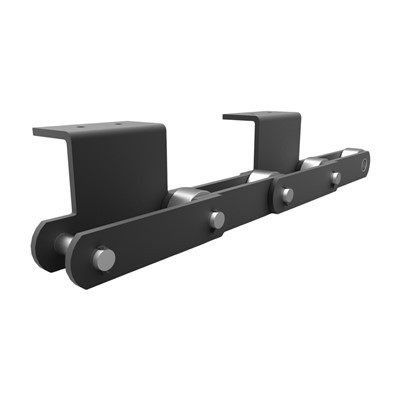
If you’re currently struggling with conveyor chain performance, throughput that’s not meeting your goals, or problems with speed-related downtime, we can help. We work with facilities across industries to analyze their conveyor systems, calculate the optimal chain speed for their operation, and supply or upgrade conveyor chains tailored to their specific load, speed, and product needs. We don’t sell one-size-fits-all chains—we work with you to find the right balance between speed, reliability, and throughput.
Transmission Chain References
- Machinery’s Handbook, 31st Edition, Industrial Press, 2020.
- Conveyor Equipment Manufacturers Association (CEMA), “Belt Conveyors for Bulk Materials,” 7th Edition, 2021.
- American National Standards Institute (ANSI) B29.1, “Precision Power Transmission Roller Chains, Attachments, and Sprockets,” 2019.
- Logistics Management, “2023 Warehouse & Distribution Operations Survey,” 2023.
- Occupational Safety and Health Administration (OSHA), “Conveyor Safety Guidelines for Manufacturing and Warehousing,” 2022.
Zhejiang Hangte Chain Transmission Co., Ltd.
We are one of the most experienced conveyor chain manufacturers and suppliers in China since 1999. Please rest assured to buy high quality conveyor chain made in China here from our factory. If you have any enquiry about cooperation, please feel free to email us.
Address: No. 195 Qinglin East Street, Qingshan Lake Subdistrict, Lin’an District, Hangzhou City, Zhejiang Province
E-mail: hangtechain@gmail.com
WebSite: https://www.chinahtchain.com/
